
Define the collection first
A student may be paying a union due, a faculty charge or a departmental fee. The payment page should make that distinction clear. Confirm the name of the collecting body, the purpose of the charge and the students it applies to before sharing a link.
Virtuo for Higher Education is built around these collections. Students can view invoices, make payments and access transaction records. Its focus is fee and dues collection for student bodies and academic units.
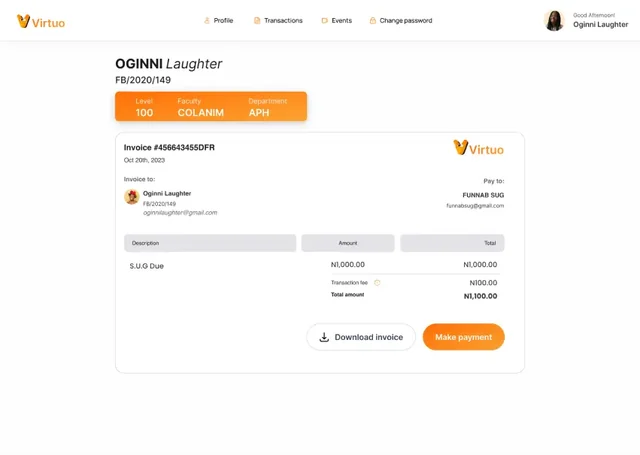
Give students a record they can return to
An invoice helps a student understand the charge before paying. The transaction record helps them find the payment later. Both should be part of the collection process rather than information someone has to request separately.
When answering an enquiry, ask for the transaction reference and enough student information to locate the correct record. Avoid circulating full student payment details in a public group to resolve an individual question.
Plan for the handover
Student leadership changes. Agree who is responsible for collections, who can answer questions and how the next team will understand the records. Clear responsibilities make the handover less dependent on a personal inbox.
Before launching, walk through the student journey from opening an invoice to finding a completed payment. Check the wording, the contact route and the instructions for a payment that needs review. A collection should be understandable to the student as well as the team running it.
Talk through your organisation’s needs.
Tell us what your team manages and the workflow you want to improve.
Talk to our team